Free Website Audit: Discover what's holding your digital presence back
What should the decision compare?
Compare the capability your roadmap needs, not only the label on the contract. Write down the work for the next 6–12 months: discovery, product strategy, UX, visual design, frontend, backend, CMS, integrations, QA, SEO, analytics, content and support. Then note when each role is needed and who will make decisions.
An in-house team brings context close to the business. It can learn the product, customers and internal constraints every day. An agency brings an existing delivery structure and access to several specialties. Both models still need a clear brief, a decision-maker, realistic review time and someone who owns the outcome.
The right choice can change by phase. A company may use an agency to establish a new platform, then operate it with an internal team. It may keep product ownership in-house while bringing an agency for design or engineering. A launch project and a five-year product capability are different decisions.
What does an in-house team do well?
An in-house team can build deep knowledge of the product, customers, data and internal politics. It is close to daily priorities. Communication is often direct, and the team can make small changes without opening a new vendor process. This is valuable when the roadmap is continuous and the organisation can support stable roles.
The trade-off is that the company must create the working system around the team. That includes hiring, onboarding, management, technical leadership, design practice, QA, security, analytics, training and retention. One person may cover several disciplines at first, but a critical project can become fragile when that person is absent or overloaded.
An internal team also needs a way to protect long-term work from urgent requests. Without prioritisation, a team can become a queue for every department. Building capability is more than hiring a developer. It is setting ownership, standards, release practice and a budget for maintenance.
What does a web agency do well?
A web agency can bring a cross-functional team for a defined project. Konzept describes its web work as combining strategy, design and engineering, with services that include web development, software development, SEO and AEO, digital strategy and enterprise solutions. The web development service is the right place to check the current scope instead of assuming every agency offers the same work.
An agency can be useful when the company needs to launch or migrate before it can hire a full team, or when a specialist problem needs concentrated attention. It may also provide a delivery rhythm, design system, technical architecture, QA and documentation that an internal team can continue.
The trade-off is dependency on a partner. The client must manage access, approvals, feedback, confidentiality, scope changes and the handover. An agency cannot know every internal constraint without help. If the client does not provide a decision-maker or content owner, the project can slow down even when the delivery team is ready.
How do the models compare?
The table is a decision frame, not a universal score. The result changes with the people, roadmap and governance on each side.
| Decision factor | In-house team | Web agency |
|---|---|---|
| Company context | Deepens through daily work | Must be transferred through discovery and collaboration |
| Skill mix | Requires hiring and retaining each needed role | Can provide several disciplines for an agreed scope |
| Start time | Depends on recruiting and onboarding | Can start when capacity and scope are confirmed |
| Control | Direct employment and internal priorities | Contractual control, access rules and agreed decision rights |
| Continuity | Depends on team retention and documentation | Depends on the partner relationship and handover quality |
| Best fit | Continuous core capability and product ownership | Defined launch, specialist work or temporary capacity |
| Main management task | Build the team and operating system | Govern scope, communication, access and transition |
Do not turn “agency” into a promise of seniority or “in-house” into a promise of quality. Ask who will do the work, how decisions are made, what is documented and what happens when priorities change.
What does the cost comparison miss?
Salary is not the full cost of an internal team. Include hiring time, recruiting, management, equipment, software, leave, training, specialist gaps, recruitment risk and the cost of waiting for a role to start. Include the work needed to coordinate several employees and the opportunity cost of unused capacity between projects.
An agency quote is not a complete comparison either. Read the scope, assumptions, timeline, review responsibilities, third-party fees, change process, support, ownership and handover. A smaller quote can be the wrong fit if it leaves architecture, content migration, QA or analytics undefined.
If the shortlist crosses a border, the price drivers change again. Nearshore agency pricing in Europe sets out what moves a European price, including the labour cost gap that Eurostat measures between member states.
Konzept’s pricing page publishes starting prices for project and monthly partnership options. Growth starts from EUR 14,500, Scale from EUR 29,500 and Enterprise from EUR 44,000. Monthly Support, Core and Accelerate plans are also published. These are Konzept’s visible offers, not a market average and not a substitute for comparing your internal operating plan.
How should ownership and governance work?
Name one accountable owner on the client side. That person does not need to write code, but must be able to decide priorities, approve scope and gather the right subject experts. Define who owns the domain, hosting, repository, CMS, analytics, design files, content and third-party accounts. Put the answer in the agreement and handover record.
Agree on review windows and escalation. A project can lose time when five people give conflicting feedback or when no one can approve content. Use one backlog, one current brief and a visible list of open decisions. An internal team needs the same discipline as an agency; proximity does not remove coordination.
For security, access should follow the least privilege needed for the work. Decide how credentials are shared, how production changes are approved and how access is removed. Document deployment, backups, integrations and recovery steps. These are practical ownership questions, not sales language.
Can a hybrid model work?
Yes. A hybrid model is often useful when the company has product knowledge but needs delivery capacity or specialist skills. The internal team can own product direction, content, data and operations. The agency can provide design, architecture, frontend, backend, migration or SEO support for a defined phase.
The risk is a fuzzy boundary. Write down who owns each decision and deliverable. Decide whether the agency commits code to the same repository, who reviews it, who talks to third-party vendors, how incidents are handled and when the agency’s role ends. The handover should begin during discovery, not on the last day.
If the internal team has a longer-term software roadmap, software development or enterprise solutions may be better starting points than a narrow website brief. If the company needs strategy before choosing a model, digital strategy can help frame the work.
What project evidence should you review?
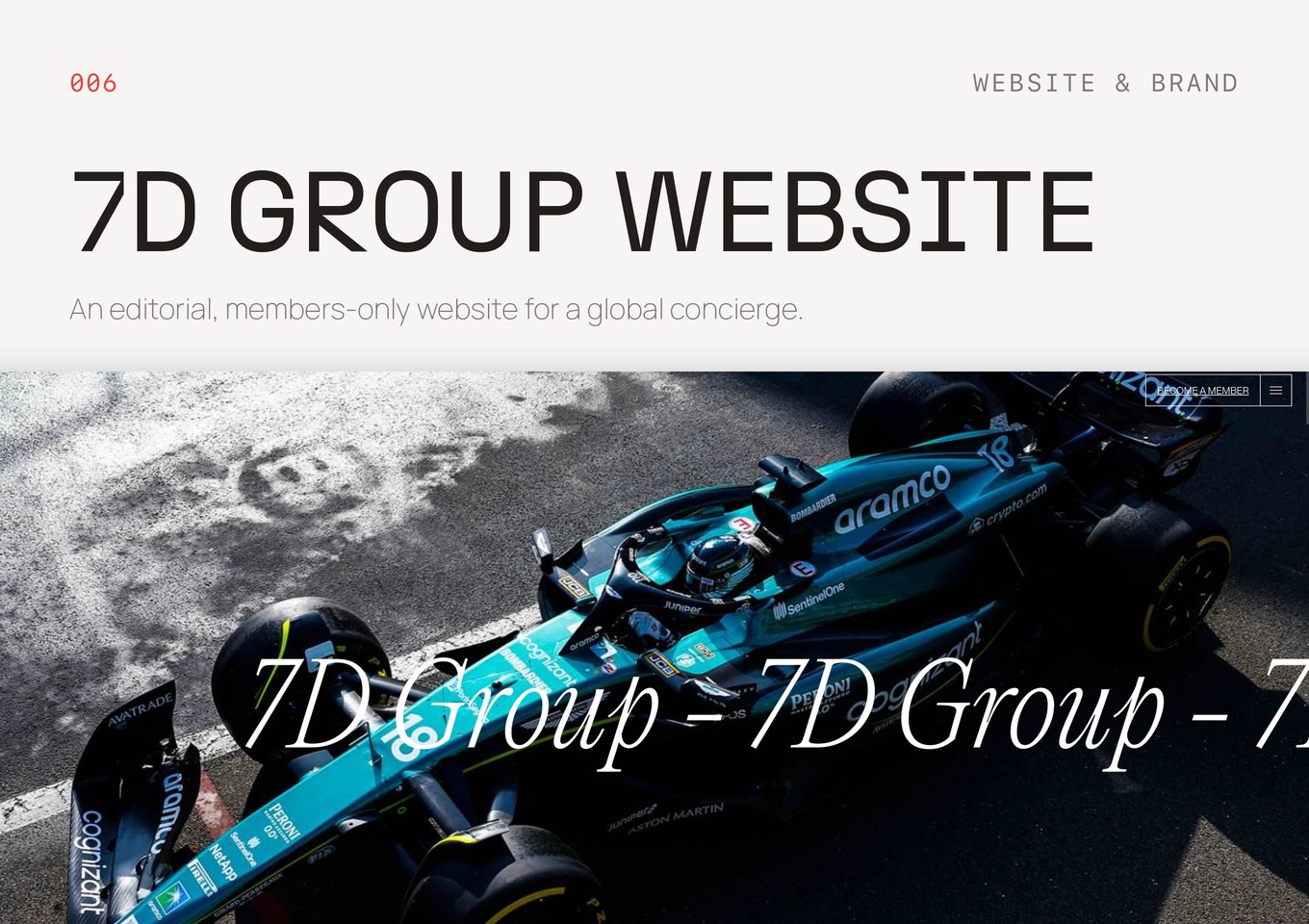
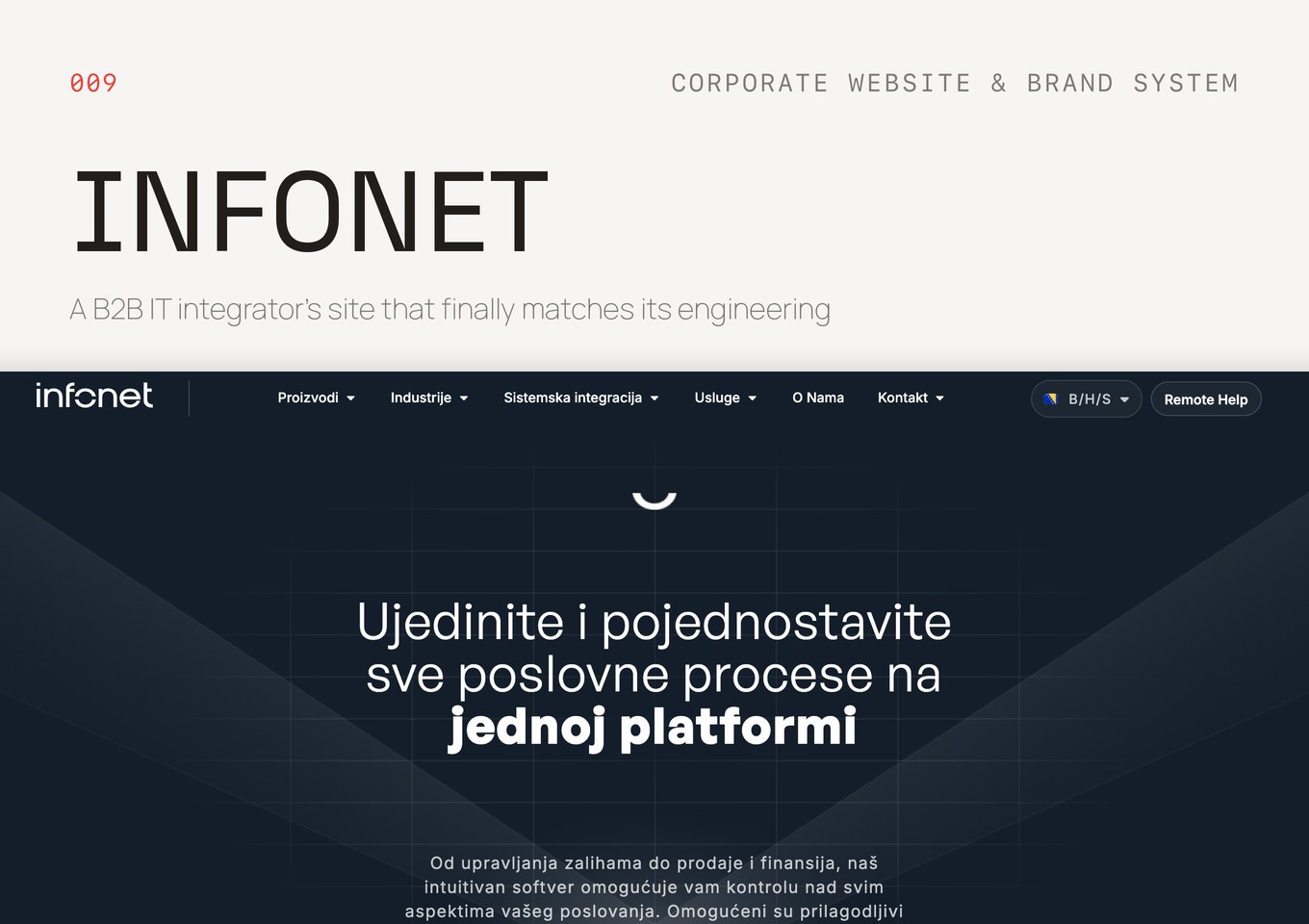
The public work portfolio includes records such as Infonet, 7D Group website and Texas Corn Producers. These real project slugs let a buyer inspect the available work. They do not prove a specific result, staffing model or technical match for your company.
Ask to see the parts that matter to your decision: the type of product, the scope, the responsibilities, the technology ownership, the post-launch plan and the documentation. A project name is only a useful comparison when you can connect it to your own constraints. Do not treat an unnamed metric or a generic portfolio image as evidence of fit.
How do you choose the right model now?
Use this short test. If the work is a continuous core capability, the roadmap is stable and you can support several roles, plan an in-house capability. If you have a defined launch, migration or specialist gap, an agency may reduce the time to start. If you have product knowledge but a capacity gap, define a hybrid engagement with a clear handover.
Before a decision, write the brief, target date, internal capacity, required skills, owner, systems, content status, risks and support needs. Ask an agency to respond to that brief. Separately estimate the realistic hiring and operating plan. Compare like with like: capability, time, risk and ownership.
If the decision lands on an agency, the next problem is comparing several of them. How to choose a web agency in Bosnia gives the seven questions to ask each one and the contract terms to settle before signing.
When you want to test the fit, book a call with the roadmap and the team you already have. Konzept can discuss a project or partnership scope. The decision should leave your company with a clear owner and a maintainable product, whether the work is delivered internally, by an agency or through both.